How to Unlock the Soprano Card in Super Mario RPG
Achieve musical perfection at Tadpole Pond by mastering Toadofsky’s final elusive melody, earning the prestigious Soprano Card, and unlocking the ultimate full-party healing items.


Image captured on Switch 2 and retouched with Nano Banana.

The very first words you hear in Alan Wake are a quote from Stephen King: "Nightmares exist outside of logic, and there’s little fun to be had in explanations; they’re antithetical to the poetry of fear." From that opening breath, Remedy Entertainment makes its intentions crystal clear. Originally released in 2010, Alan Wake was always a playable homage to the masters of supernatural horror and Twin Peaks. Now, with Alan Wake Remastered, this cult classic returns with a sharpened 4K resolution and a smooth 60 FPS, proving that its unique blend of literary storytelling and light-based combat remains brilliantly terrifying today.
If you are a fan of Stephen King's tropes—the struggling writer, the idyllic small town with a dark secret, the blurring lines between fiction and reality—Alan Wake is your interactive holy grail.
The premise follows the titular Alan Wake, a best-selling thriller novelist suffering from a severe case of writer's block. To escape the pressures of New York, he and his wife, Alice, travel to the picturesque, foggy town of Bright Falls, Washington. But paradise quickly shatters. Alice is dragged into the depths of a volcanic lake by a mysterious Dark Presence. Alan wakes up a week later behind the wheel of a crashed car, with no memory of the missing days.
As he wanders through the dark woods, he begins finding scattered pages of a manuscript titled Departure—a horror novel he apparently wrote during his blackout. The chilling hook? The events on the pages are coming true right in front of his eyes. The narrative is masterfully structured like a television miniseries, complete with cliffhangers, licensed music credits at the end of each act, and a "Previously on Alan Wake" recap. It makes you feel like the protagonist of a lost TV adaptation of a King novel, trapped in a story you wrote but cannot control.
While the story provides the psychological dread, the combat provides the visceral panic. In Bright Falls, the Dark Presence has possessed the townspeople, turning them into "The Taken"—shadowy lumberjacks, park rangers, and townsfolk who hunt you relentlessly through the woods.
This is where Alan Wake distinguishes itself from every other shooter. Traditional firearms are completely useless against The Taken as long as they are shrouded in their shield of darkness. Your primary weapon is not a gun, but your flashlight. You must "boost" your flashlight beam to burn away the darkness protecting the enemies. Only when the shadows violently burst off them can you use your revolver or shotgun to put them down.
This creates a frantic, resource-management rhythm. You are constantly juggling batteries for your flashlight and ammo for your guns. Furthermore, light is your only true safe haven. Flares act as a desperate, burning shield when you are surrounded, and a well-thrown flashbang acts as a literal smart bomb, instantly obliterating any Taken in the blast radius.
Does the gameplay show its age? Slightly. Alan is a writer, not a space marine; his stamina is notoriously terrible, and he gets winded after sprinting for just a few seconds. The jumping mechanics are stiff, and the combat encounters can feel a bit repetitive in the game's later chapters. However, the sheer tension of frantically reloading a revolver in the pitch-black woods while trying to pop a fresh battery into your flashlight never loses its thrill.
Alan Wake Remastered is not a full-scale remake, but rather a highly respectful restoration. The leap to 4K resolution and a rock-solid 60 frames per second is the biggest game-changer. The improved framerate makes the cinematic dodge mechanic—where Alan narrowly evades an axe swing in glorious slow-motion—feel incredibly smooth and responsive.
Remedy also overhauled the environmental textures, the character models, and the volumetric lighting. The thick, rolling fog of the Pacific Northwest feels more oppressive than ever, and the way light cuts through the darkness looks spectacular. Additionally, Alan's face was remodeled to closely match his real-life actor, Ilkka Villi, making his expressions more authentic. Interestingly, the developers also removed the blatant real-world product placements from 2010 (you will no longer be collecting Energizer batteries or passing Verizon billboards), helping to preserve the timeless, isolated feel of Bright Falls.
Beyond its standalone brilliance, playing Alan Wake Remastered has become mandatory reading for modern gaming. It includes both story DLCs (The Signal and The Writer), completing Alan's original arc. But more importantly, this game is "Chapter 1" of the Remedy Connected Universe. To fully grasp the mind-bending lore of the critically acclaimed Control (specifically its AWE expansion) and to prepare yourself for the survival-horror masterpiece that is Alan Wake 2, you must understand where the nightmare began.
Pros:
Cons:
Alan Wake Remastered is a triumph of narrative design and atmospheric horror. While its gameplay mechanics occasionally show the wrinkles of a game over a decade old, its storytelling, its oppressive atmosphere, and its brilliant use of light as a weapon have aged like fine wine. It is an interactive novel that demands to be experienced. Whether you are a newcomer looking to enter the Remedy Connected Universe or a returning fan ready to face the Dark Presence once more, this is the definitive way to survive the nightmare of Bright Falls. Just remember: stay in the light.
Affiliate link: Support the blog via Instant Gaming at no extra cost.
Alan Wake Remastered
Others Posts
Achieve musical perfection at Tadpole Pond by mastering Toadofsky’s final elusive melody, earning the prestigious Soprano Card, and unlocking the ultimate full-party healing items.
RoboCop: Rogue City: Teyon's faithful adaptation, Peter Weller's return, the sheer power of the Auto-9, and the gritty streets of Old Detroit.

We explore how a broken handshake between Nintendo and Sony birthed a 32-bit titan. By combining developer-friendly hardware, the vast storage of the CD-ROM, and an aggressive marketing strategy

PlayStation 5 Pro hardware: PSSR, Advanced Ray Tracing, and the AI Revolution. We analyze Sony's PlayStation Spectral Super Resolution (PSSR), RDNA 4 Ray Tracing advancements, and the engineering behind the end of the Fidelity vs. Performance compromise.

How to Dismantle Giant Machines: Master every major boss fight in Binary Domain. Learn critical weak points, squad tactics, and armor-stripping strategies in our complete boss guide.
The PlayStation 5 hardware architecture. We analyze Mark Cerny's custom I/O complex, the revolutionary 825GB SSD, liquid metal thermal engineering, and how Sony eradicated the traditional storage bottleneck.

Are the Minecraft Dungeons DLCs worth buying? We break down all 6 expansions, their biomes, unique mechanics, boss fights, and rank the absolute must-haves.

Master turn-based combat in Gears Tactics. Learn to chain executions for infinite Action Points, optimize class builds, and crush colossal bosses.

Analysis of the PlayStation 4 and PS4 Pro hardware. We examine the shared CPU bottleneck, the mirrored butterfly GPU design, memory optimizations, and the hardware-level checkerboard rendering that enabled the 4K transition.
PlayStation 5 Pro hardware: PSSR, Advanced Ray Tracing, and the AI Revolution. We analyze Sony's PlayStation Spectral Super Resolution (PSSR), RDNA 4 Ray Tracing advancements, and the engineering behind the end of the Fidelity vs. Performance compromise.
guides
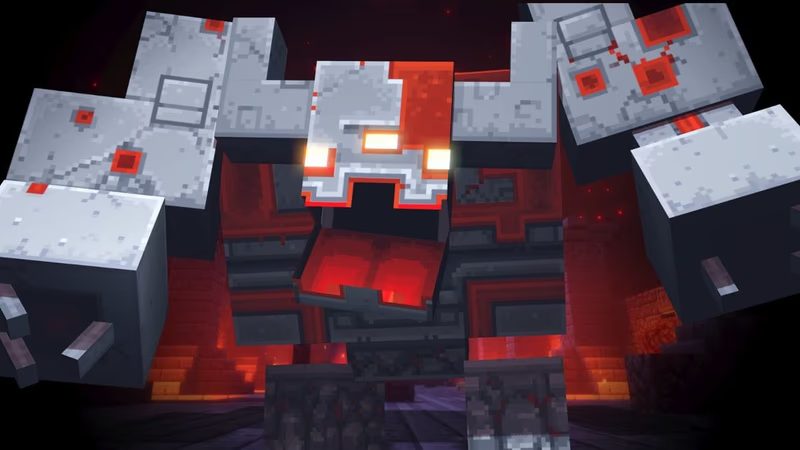
Conquer the toughest bosses in Minecraft Dungeons. Master attack patterns, exploit weak points, and equip the best builds for every major fight.