StarCraft Beginner's Guide: Core Strategy for New Commanders
Updated at October 9, 2026
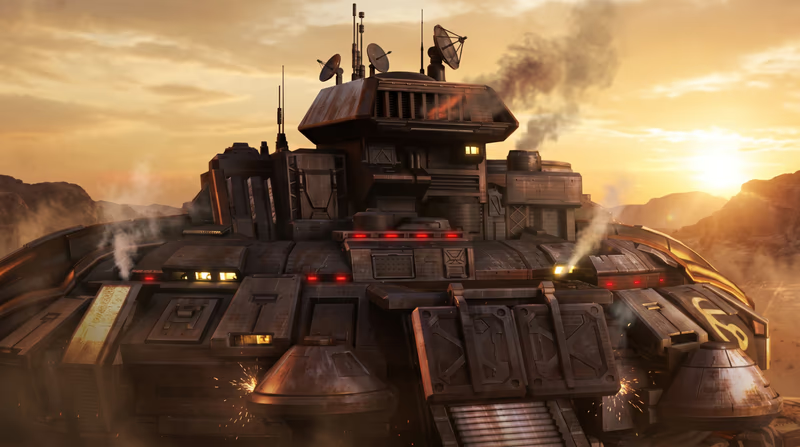
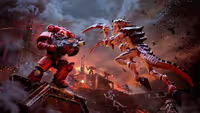
StarCraft – Terran Base Building Artwork
Picking Your First Faction
Every faction in StarCraft punishes a different kind of mistake, so the right starting pick depends on what you want to practice first.
Terran for Forgiveness: Repairable buildings, mobile Siege Tanks, and the ability to lift off and relocate structures give new players room to recover from a bad opening.
Zerg for Aggression: Cheap units and Creep-fueled expansion reward players who want to pressure an opponent early, but a single lost base can snowball into a loss fast.
Protoss for Fewer, Bigger Decisions: Shielded units and powerful late-game tech mean fewer units to micromanage at once, a gentler introduction to multitasking than Zerg's swarm economy.
Start with Terran. Its margin for error is the widest of the three, and its mechanics map cleanly onto what Zerg and Protoss ask of you later.
Economy First: Worker and Supply Management
Nothing in StarCraft matters if your economy stalls, and new players lose far more games to a quiet mineral drought than to a dramatic rush.
Never Stop Producing Workers: SCVs, Drones, and Probes should be in near-constant production for the first several minutes of any match. A base with idle production facilities is losing the game in real time.
Watch Your Supply Count: Running out of Supply Depots, Overlords, or Pylons halts unit production entirely. Build the next supply structure before you're capped, not after.
Saturate Before You Expand: A single mineral patch cluster supports roughly two to three workers per patch efficiently; pushing past that point yields diminishing returns, and that's the signal to start a second base instead of cramming more workers into the first.
Build Order Basics for Each Faction
A build order is just the sequence you construct things in, and having one memorized removes the most common source of early losses: hesitation.
Terran Standard Opening: Supply Depot, Barracks, Refinery, second Supply Depot, then a Factory once gas income is flowing, giving you Marines early and Siege Tanks by the midgame.
Zerg Standard Opening: Overlord, Spawning Pool, then a steady Drone and Overlord rhythm to keep supply from capping while building toward Zerglings or faster tech.
Protoss Standard Opening: Pylon, Gateway, Assimilator, second Pylon, prioritizing Zealot production before committing gas toward Cybernetics Core tech.
Memorize One, Then Adapt: Learn a single reliable build for your chosen faction before trying to improvise. Deviating from a plan you don't understand yet usually costs more than it gains.
Scouting and Reading Your Opponent
Build orders only work if you know what you're building against, which is why scouting is not optional in competitive play.
Send a Worker Out Immediately: A single scouting worker sent toward likely expansion spots in the first minute of a match tells you your opponent's faction and rough strategy well before any units clash.
Watch for Tech Buildings, Not Just Units: A Factory, Spire, or Cybernetics Core going up tells you what's coming several steps ahead of the units themselves appearing on the field.
React, Don't Panic: Seeing an aggressive early build doesn't mean abandoning your own plan outright; it means preparing specific defensive units (like Terran Bunkers or Zerg Sunken Colonies) in response.
Common Beginner Mistakes to Avoid
A handful of habits separate a smooth learning curve from a frustrating one.
Don't Forget to Rebind Hotkeys: Assigning control groups to your base and army early saves critical seconds in every engagement; relying purely on mouse clicks will lose races against players who don't.
Don't Overextend Your Army Alone: Pushing a weak early army deep into enemy territory without support usually trades your whole investment for nothing.
Don't Neglect Your Base While Attacking: Keep worker and unit production running even while your army is engaged elsewhere; a won fight means little if your economy stalled during it.
Play Against the Computer First: Several practice matches against the AI, focused purely on build order and worker count, build the muscle memory that makes your first real ladder games far less punishing.
Affiliate link: Support the blog via Instant Gaming at no extra cost.
StarCraft
Developer: Blizzard Entertainment
Publisher: Blizzard Entertainment
Engine: Modified Warcraft II Engine
Genre: Real-Time Strategy
Release date: March 31, 1998
Duration: 15-20 hours (three-campaign story)
Available on
PC (Windows)Classic Mac OSNintendo 64
Others Posts
StarCraft Review: The RTS That Built Esports
Blizzard's StarCraft proved three wildly asymmetric factions could stay perfectly balanced, turning a Warcraft II engine refit into the game that built South Korea's esports industry and defined competitive RTS for a generation.
Ensemble Studios proved RTS games can thrive on a gamepad. We analyze Halo Wars: Definitive Edition’s 60 FPS performance, Blur cutscenes, and UNSC lore.
Valve took the tightest puzzle design in the industry, doubled the toolset, added a co-op campaign and two of gaming's best-written characters, and somehow made the sequel better than the original.
Anno 1800 rebuilds the series around the smoke and steel of the second Industrial Revolution, turning supply-chain logistics into the genre's richest city-building puzzle.
An engineering retrospective on the Nintendo Game Boy Color. We explore how a double-speed Sharp SM83 core, a backward-compatible palette-mapped color LCD, and translucent 'Atomic Purple' shells turned a stopgap handheld into the system that carried Pokémon's second generation.
Analysis of the PlayStation 4 and PS4 Pro hardware. We examine the shared CPU bottleneck, the mirrored butterfly GPU design, memory optimizations, and the hardware-level checkerboard rendering that enabled the 4K transition.
games
Call of Juarez: Gunslinger Review: A Tall Tale Told with a Smoking Gun
Techland traded gritty realism for painterly legend in this arcade-shooter retelling of the Old West's most famous gunslingers, bounty hunters, and outlaws.