PS3 Hardware Analysis: How the Cell Architecture Almost Broke Sony
A technical breakdown of the PlayStation 3's engineering and market performance. We examine the notoriously complex Cell Broadband Engine, the split-memory bottleneck.

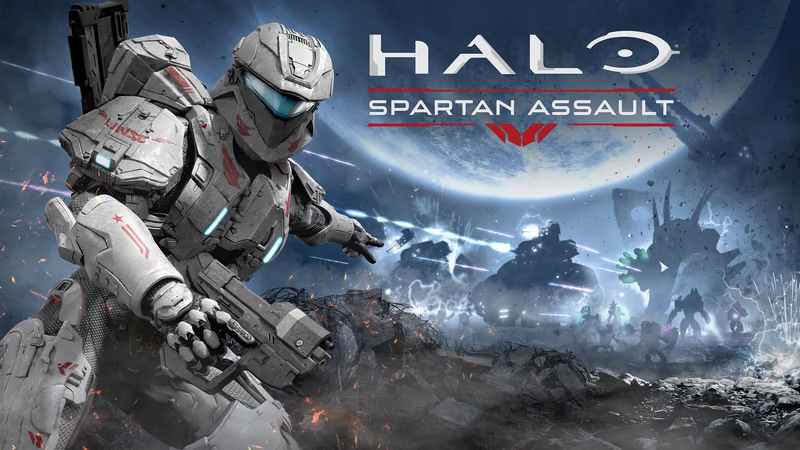
Halo: Spartan Assault – Official Sarah Palmer Key Art

When we think of Halo, the first things that come to mind are first-person camera angles, massive ring worlds, and the Master Chief. However, in 2013, 343 Industries and Vanguard Games decided to experiment and expand the universe with Halo: Spartan Assault, translating the franchise's signature combat "dance" into an isometric twin-stick shooter.
Originally born as an exclusive experiment for Windows 8 and mobile devices before making the jump to Xbox consoles and PC, Spartan Assault serves as a bridge in the franchise's lore. Set between the events of Halo 3 and Halo 4, the game is presented as a UNSC tactical simulator.
Players relive the historical battles of Commander Sarah Palmer and Spartan Davis on the moon of Draetheus V, fighting to repel a rogue Covenant faction led by the ruthless Sangheili commander Merg Vol.
The greatest triumph of Spartan Assault is how accurately it translates the FPS mechanics into a top-down perspective. Shooting with the right stick while moving with the left feels incredibly fluid, and the classic "Golden Triangle" of Halo combat—weapons, grenades, and melee—remains completely intact.
Because the game was initially designed for mobile platforms, the campaign consists of bite-sized missions that rarely last longer than three to five minutes. While this makes for a fast-paced experience, the true depth lies in its arcade-style replayability.
Your goal is rarely just to survive. The game pushes you to chase high scores by maintaining kill multipliers and earning classic announcer medals like Double Kill or Killtacular. Before each mission, players can activate classic Skulls (such as turning off the HUD or making enemies throw more grenades) to drastically increase the difficulty in exchange for a massive XP boost.
Unfortunately, Spartan Assault carries a glaring flaw from its smartphone roots: its loadout economy.
Rather than finding heavy weapons naturally on the battlefield, the game asks you to customize your loadout before a mission drops. Equipping power weapons like the Sniper Rifle or the Spartan Laser, as well as temporary damage boosters, requires spending Experience Points (XP). The catch? This equipment only lasts for one mission. This rental system feels incredibly restrictive and is a frustrating leftover from the game's original release, which heavily encouraged paying real money (microtransactions) to afford the best gear.
Visually, the game looks like a flawless, miniature diorama of the Halo universe. The clean UI, detailed character models, and vibrant plasma explosions pop beautifully on screen.
The audio design does the heavy lifting for immersion. Composer Tom Salta delivers a sweeping, bombastic score that feels right at home in the franchise, perfectly paired with the recycled, authentic sound effects of Covenant weapons firing and Elites barking orders.
When the game ported to consoles, Vanguard Games added a dedicated online cooperative mode. This mode pits two Spartans against endless waves of the Flood, providing a much-needed chaotic multiplayer experience, even if it is completely separate from the main campaign.
Pros:
Cons:
Halo: Spartan Assault is a highly competent, bite-sized tactical appetizer that proves the franchise's combat loop works beautifully outside of the first-person perspective. While its mobile-gaming DNA holds it back from true greatness—mainly through abrupt mission pacing and an annoying loadout economy—it remains a fun, arcade-style distraction for die-hard fans of the universe.

Affiliate link: Support the blog via Instant Gaming at no extra cost.
Halo: Spartan Assault
Others Posts
A technical breakdown of the PlayStation 3's engineering and market performance. We examine the notoriously complex Cell Broadband Engine, the split-memory bottleneck.
Are the Minecraft Dungeons DLCs worth buying? We break down all 6 expansions, their biomes, unique mechanics, boss fights, and rank the absolute must-haves.
Master turn-based tactics in Warhammer 40,000: Battlesector. Learn Momentum mechanics, optimal Overwatch setups, and Blood Angels campaign strategies.
We analyze the return of the legendary alliance between Nintendo and Square. A remake that strictly honors its 1996 roots while dressing up in gorgeous diorama graphics and polished combat.

We explore how SNK defied market logic by packaging exact arcade hardware for the living room, creating a brutally powerful, absurdly expensive 16-bit console that became the ultimate status symbol and reigned supreme for an astonishing 14 years.
Lost Odyssey: Hironobu Sakaguchi's Xbox 360 epic, Nobuo Uematsu's soundtrack, turn-based tactical combat, and the emotional Thousand Years of Dreams.
Are the Minecraft Dungeons DLCs worth buying? We break down all 6 expansions, their biomes, unique mechanics, boss fights, and rank the absolute must-haves.

Master turn-based combat in Gears Tactics. Learn to chain executions for infinite Action Points, optimize class builds, and crush colossal bosses.

Analysis of the PlayStation 4 and PS4 Pro hardware. We examine the shared CPU bottleneck, the mirrored butterfly GPU design, memory optimizations, and the hardware-level checkerboard rendering that enabled the 4K transition.

PlayStation 5 Pro hardware: PSSR, Advanced Ray Tracing, and the AI Revolution. We analyze Sony's PlayStation Spectral Super Resolution (PSSR), RDNA 4 Ray Tracing advancements, and the engineering behind the end of the Fidelity vs. Performance compromise.
guides
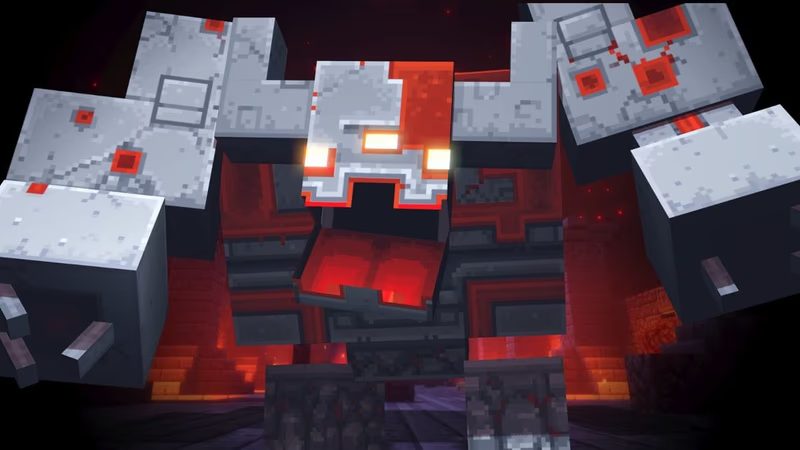
Conquer the toughest bosses in Minecraft Dungeons. Master attack patterns, exploit weak points, and equip the best builds for every major fight.