The Witcher Beginners Guide: First Steps in Kaer Morhen and Vizima
A first-steps guide to The Witcher (2007): surviving the Kaer Morhen prologue, learning rhythm-based combat, and not dying of toxicity in your first Vizima brew.
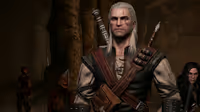
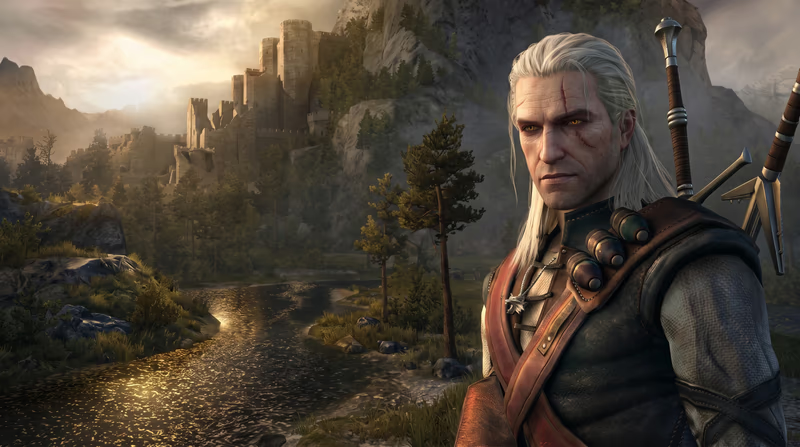
CD Projekt RED's debut cast Geralt into a morally grey, politically fractured fantasy world.

Before Geralt of Rivia had a Netflix deal or a PlayStation exclusive sequel pulling GOTY votes, he was a C-list fantasy hero in a game nobody outside Poland was watching. CD Projekt RED was a two-person localization outfit that had spent years translating Baldur's Gate for the Polish market before it decided to build something of its own. That gamble shipped on October 26, 2007, built on a heavily modified version of BioWare's Aurora Engine, and it adapted Andrzej Sapkowski's novels at a moment when most Western players had never heard the name Sapkowski at all.
The Witcher doesn't play like a confident AAA debut. Its interface is clunky, its first act drags, and its combat timing takes real patience to learn. What it gets right, though, it gets right in a way almost nothing else on shelves in 2007 attempted: a world where every faction lies to you, every quest has a cost somebody pays, and the hero himself is a genetically mutated monster-slayer that half the population wants dead on principle.
Geralt wakes up in the ruins of Kaer Morhen, the witchers' mountain fortress, with amnesia after a mercenary raid nearly wipes out his order. From there the game drags him through Vizima and its surrounding swamps, chasing the people responsible while the kingdom around him falls apart in a three-way scrum between the human nobility, the non-human Scoia'tael resistance, and the fanatical Order of the Flaming Rose.
The racial-conflict plot was blunt by 2007 RPG standards, treating elves and dwarves as a stand-in for ethnic persecution without much subtlety. It still lands harder than the genre's usual "ancient evil awakens" plot, because the game refuses to tell you who's right.
Combat is the single most divisive system in the game, and it earns both the praise and the complaints. Clicking in rhythm with Geralt's swing animation, rather than spamming the mouse, chains attacks into faster combos; miss the timing window and he stumbles through a slow, vulnerable recovery. Three stances handle different enemy types: a fast style for lone human bandits, a strong style for armored brutes, and a group style built for packs of drowners and ghouls.
Once the timing sets in, stance-switching between a pack of ghouls and a lone noonwraith starts to feel like a puzzle rather than a chore, and that's the moment the combat stops being a liability and becomes one of the game's actual hooks.
Where most RPGs treat potions as consumables you buy and forget, The Witcher turns brewing into a genuine risk management system. Geralt needs ingredients harvested from the monsters he kills and the herbs scattered across each map, and every potion he drinks pushes his toxicity meter closer to a red line that causes real damage if crossed.
It's a system that rewards the kind of player willing to read tooltips and plan ahead, and it punishes the kind who treats every fight the same way. That friction is deliberate, and it's one of the clearest fingerprints CD Projekt RED carried forward into the sequels.
The dialogue system doesn't dump a morality meter on screen, and that absence is the point. Siding with the Scoia'tael in Chapter 3 doesn't flag a "good" or "evil" choice; it just changes who shows up later, who's alive in the epilogue, and which NPCs treat Geralt as an ally versus a target.
This refusal to score the player's morality was unusual in 2007, when BioWare's own Paragon/Renegade-style systems were becoming the genre default. The Witcher bet that ambiguity would be more memorable than a meter, and on replay, that bet mostly holds up.
Pros:
Cons:
The Witcher is a flawed, occasionally clumsy debut that still manages to out-think most of the polished RPGs that surrounded it on store shelves in 2007. It's the sound of a studio figuring out, in real time, what it actually wanted to say about heroism, prejudice, and the cost of picking a side — lessons CD Projekt RED would sharpen into Geralt's far more famous sequels. Judged purely as a 2007 action RPG, it's rough around the edges. Judged as the first draft of one of gaming's defining fantasy franchises, it's essential.
Affiliate link: Support the blog via Instant Gaming at no extra cost.
The Witcher
Others Posts
A first-steps guide to The Witcher (2007): surviving the Kaer Morhen prologue, learning rhythm-based combat, and not dying of toxicity in your first Vizima brew.
Blizzard North's Diablo turned a slow, grid-based roguelike pitch into a real-time click-fest that invented the loot-driven dungeon crawler, built on randomized levels and a single, endless staircase down.
New to Tristram? Learn which class to pick, how to survive the Cathedral's first levels, and why hoarding gold at Griswold's matters more than your weapon.
Wasteland 2: Director's Cut—inXile's crowdfunding triumph, brutal moral choices, tactical squad-based survival, and post-apocalyptic roleplaying.
Build the ultimate Wasteland 2 squad. We rank the best recruits in Arizona and LA, explain stats evolution, and list the most essential skills for smooth progression.
Blizzard's StarCraft proved three wildly asymmetric factions could stay perfectly balanced, turning a Warcraft II engine refit into the game that built South Korea's esports industry and defined competitive RTS for a generation.
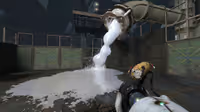
A newcomer's guide to Portal 2's controls, gel and funnel mechanics, and co-op basics - everything you need before Aperture Science starts testing you for real.
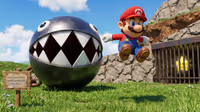
A practical, course-by-course guide to Super Mario 64 - how to navigate Peach's Castle, which Stars to chase first, and how to actually get all 120 without wasting hours on the ones that trip everyone up.
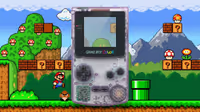
An engineering retrospective on the Nintendo Game Boy Color. We explore how a double-speed Sharp SM83 core, a backward-compatible palette-mapped color LCD, and translucent 'Atomic Purple' shells turned a stopgap handheld into the system that carried Pokémon's second generation.

Analysis of the PlayStation 4 and PS4 Pro hardware. We examine the shared CPU bottleneck, the mirrored butterfly GPU design, memory optimizations, and the hardware-level checkerboard rendering that enabled the 4K transition.
guides
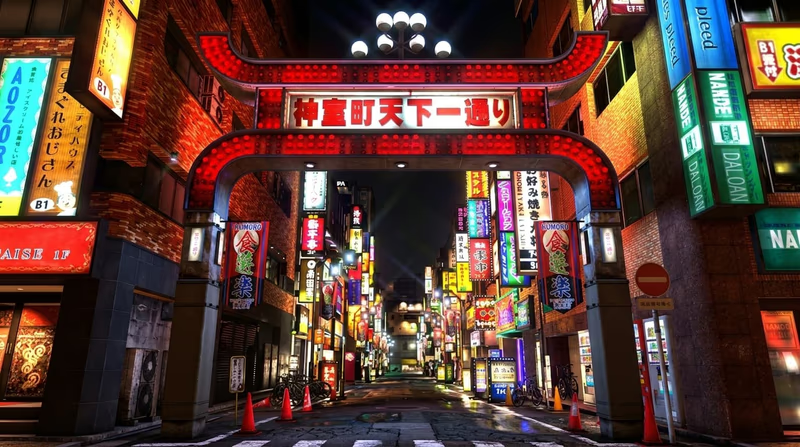
Ten essential tips for starting Yakuza 0: managing early yen before Real Estate Royale and Cabaret Club Czar open up, navigating Kamurocho and Sotenbori without getting lost, and understanding the save system so you never lose progress.