Resident Evil: Chronological Play Order and Story Guide
Discover the core story without spoilers, the exact chronological order to play the franchise, and which modern platforms to find them on.

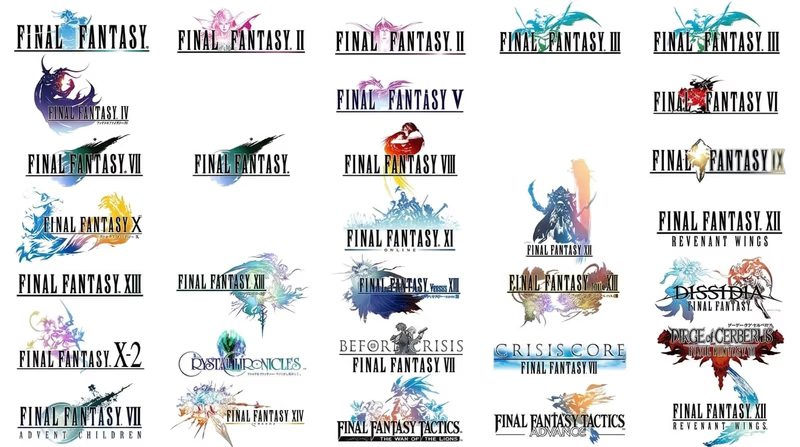
The Final Fantasy mainline saga, from the NES original to Final Fantasy XVI

Final Fantasy has no single timeline — each numbered entry is its own standalone world. Here's the order that actually makes sense to play them in, release order vs. sub-series order, and where to find each game today.
Square dropped the original Final Fantasy in Japan on December 18, 1987, as a last roll of the dice for a studio on the edge of bankruptcy. Hironobu Sakaguchi's gamble paid off so completely that it spawned sixteen mainline numbered entries, two long-running MMOs, and a web of spin-offs that now spans nearly four decades.
That history is the source of the confusion. Unlike Resident Evil or Metal Gear, there is no connective Umbrella Corporation or Big Boss thread running through every entry. Final Fantasy VII has nothing to do with Final Fantasy IX. Ivalice, the world of XII, shares no continuity with Eos, the world of XV. "Chronological" here doesn't mean one continuous plot — it means the order that actually respects how the games were built to be experienced, sub-series kept intact rather than scattered.
Crystals, summoned beasts, and a recurring cast of archetypes are the saga's real connective tissue, not a shared calendar. Chocobos, moogles, the Cid who shows up in some engineering role every single game, spells named Firaga and Curaga — these are the saga's signature, repeated and reinvented rather than continued.
Square Enix uses each numbered entry to reset the cast, the setting, and often the entire combat system from scratch. Final Fantasy VI is a steampunk opera about an Empire weaponizing magic; Final Fantasy X is a tropical pilgrimage story told through Spira's cycle of sacrifice; Final Fantasy XVI is a Game of Thrones-flavored war between nations armed with living Eikons. Picking an entry point isn't about catching up on lore. It's about picking the era and combat style that sounds most appealing and starting there.
Most of the sixteen mainline games can be played in pure release order without losing anything, because they don't reference each other. The exception is the handful of entries that got direct sequels or prequels, and those need to stay grouped so the story lands in the right sequence.
This list runs oldest to newest, with every sub-series folded into its proper slot. Square Enix's Pixel Remaster line has made the earliest, hardest-to-find entries more accessible than they've been in decades, so lean on those versions unless you specifically want the original hardware feel.
Few franchises let you watch an entire medium mature in real time the way Final Fantasy does. Playing I through XVI in order means watching turn-based combat evolve into the Active Time Battle system, then into Gambits, then into the full action combat of XV and XVI, each shift a genuine swing at reinventing what a Final Fantasy battle even is.
The soundtracks alone justify the marathon. Nobuo Uematsu's work on IV through X still gets orchestral tours decades later, and the series has never stopped treating its score as a lead character rather than background noise.
Don't treat this list as a rulebook. Jump in wherever a setting or combat system grabs you, then circle back for the rest once the saga has its hooks in. The chronological order above exists to protect the handful of entries that actually need it, not to gatekeep the other dozen worlds that are perfectly happy to be visited out of order.

Affiliate link: Support the blog via Instant Gaming at no extra cost.
Others Posts
Discover the core story without spoilers, the exact chronological order to play the franchise, and which modern platforms to find them on.
A new-player's guide to Final Fantasy XV: how to drive, hunt, cook, and fight your way across Lucis without wasting your first twenty hours on avoidable mistakes.
A progression-focused guide to Final Fantasy XV: how to power-level with the Galdin Quay and Altissia hotel EXP multipliers, where to find all 13 Royal Arms and build around them, and which Ignis recipes actually move the needle.
A practical beginner's guide to Grand Theft Auto IV: The Complete Edition, covering early money-making, which weapons and vehicles to prioritize, and how to approach the bundled Episodes from Liberty City content.

How to Dismantle Giant Machines: Master every major boss fight in Binary Domain. Learn critical weak points, squad tactics, and armor-stripping strategies in our complete boss guide.
A beginner's guide to surviving the first 72 hours in the Willamette Parkview Mall: time management, must-do cases, survivor rescue priorities, and early psychopath fights.
Valve took the tightest puzzle design in the industry, doubled the toolset, added a co-op campaign and two of gaming's best-written characters, and somehow made the sequel better than the original.

Anno 1800 rebuilds the series around the smoke and steel of the second Industrial Revolution, turning supply-chain logistics into the genre's richest city-building puzzle.
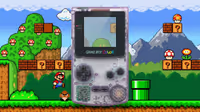
An engineering retrospective on the Nintendo Game Boy Color. We explore how a double-speed Sharp SM83 core, a backward-compatible palette-mapped color LCD, and translucent 'Atomic Purple' shells turned a stopgap handheld into the system that carried Pokémon's second generation.

Analysis of the PlayStation 4 and PS4 Pro hardware. We examine the shared CPU bottleneck, the mirrored butterfly GPU design, memory optimizations, and the hardware-level checkerboard rendering that enabled the 4K transition.
games
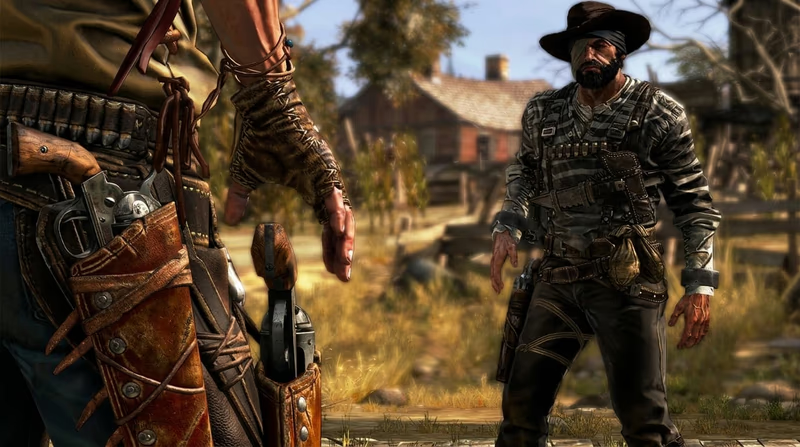
Techland traded gritty realism for painterly legend in this arcade-shooter retelling of the Old West's most famous gunslingers, bounty hunters, and outlaws.