Final Fantasy XV Review
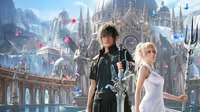
Final Fantasy XV traded the series' old turn-based roots for an open-road action RPG about four friends, a doomed kingdom, and the weight of a crown — a flawed, beautiful swan song for an era of Final Fantasy.
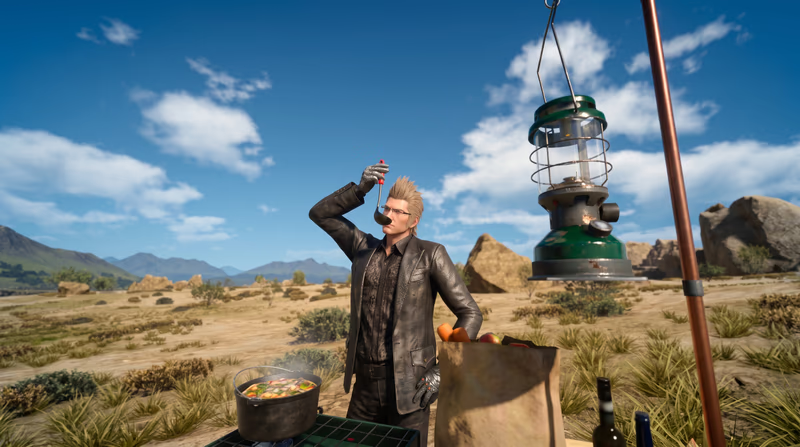
Setting up camp and cooking with Ignis is one of the first systems new players should master in Final Fantasy XV.

The opening hours of Final Fantasy XV move slowly on purpose, easing you into Lucis before the empire of Niflheim burns it down behind you. Resist the urge to rush the main quest line straight out of Hammerhead, the first proper hub. Talk to Cindy at the garage, pick up every sidequest board posting you can find, and let the game teach you its systems before chapter two forces a faster pace. Early sidequests are short, low-risk, and reward enough experience and gil to make the midgame noticeably easier.
Spend your first few hours building a stock of potions and elixirs rather than hoarding gil. Death in combat sends you back to your last save or rest point, and a dead-empty item pouch during a surprise Iron Giant encounter can turn a five-minute fight into a wipe. Cup Noodles, bought cheap from any convenience store, restore HP outside of battle and are the single best early investment in the game.
The Regalia drives itself along fixed roads until you unlock manual control, which happens automatically a few hours into chapter three. Until then, use auto-drive time productively: fast travel while the car handles the route, or pull over at any rest stop to explore on foot. Once manual driving unlocks, you can leave the highway entirely and cut across open terrain, though most off-road paths are blocked by cliffs or water until you're meant to reach them.
Time of day matters more than it first seems. Daemons spawn in large numbers after dark and hit far harder than their daytime counterparts, so plan to be at a campsite, hotel, or inside a town before the sky turns orange. Camping triggers Ignis's cooking system: each recipe grants a specific stat buff, like increased strength or elemental resistance, that lasts until you rest again. Stock up on ingredients at outposts and cook before any major story battle rather than mid-dungeon, since camping is unavailable inside most interiors.
Combat drops you into real time immediately, and new players consistently under-use two mechanics: warp-strikes and parrying. Holding the attack button lets Noctis auto-combo, but tapping it to warp-strike onto a marked point resets your position and refills a portion of HP on landing, making it both an offensive tool and a panic button. Don't hoard the MP that warp-strikes consume. Sitting at full MP while slowly chipping away at a Garula's health bar wastes the system's best feature.
Parrying requires pressing the defend button at the exact moment an enemy's attack connects, triggering a free counter-hit window. It's unforgiving early on, but practicing it against weaker enemies like Goblins pays off hugely against the Iron Giants and Behemoths that show up from chapter four onward. Equip Gladio, Ignis, and Prompto with abilities from the ascension grid as soon as AP allows. Their link-strikes and techniques, triggered automatically in combat once unlocked, add damage and utility you'll otherwise miss entirely.
Elemancy, Final Fantasy XV's magic system, works differently than past entries: you craft spells at elemental deposits scattered across Lucis, combining fire, ice, or lightning energy with catalyst items to create flasks you throw like grenades. Early spells are crude area damage, but stacking catalysts (a Mega Phoenix with a Fire flask, for instance) produces status effects worth carrying into tougher fights. Be careful where you throw them, since area spells damage allies caught in the blast radius.
The Armiger, unlocked through the main story, arms Noctis temporarily with the ancestral weapons of Lucis's past kings, dealing massive damage for a limited meter. Save it for named hunts and major story bosses rather than burning it on regular enemies. Weapon and accessory upgrades come from crafting at Cid's garage using hunt materials, so don't sell rare drops like Garula hides or Iron Giant plating until you've checked whether a recipe needs them.
Hunts are bounty-board contracts to kill a specific, often unique, monster for a gil and item reward, and they're the most reliable way to fund gear upgrades in the first twenty hours. Check every outpost's hunt board, not just Hammerhead's, since rewards scale with the region and some high-value hunts only appear in later areas. Lower-rank hunts, marked with a single star, are safe to take as soon as they appear. Higher-rank hunts often recommend a party level well above what the main story has given you, so check the suggested level before engaging.
Night hunts carry the best rewards but the highest risk, since the same darkness that spawns daemons also makes hunt targets more aggressive. Bring elemental flasks suited to the target's weakness, information usually hinted at in the hunt's own flavor text, and always keep a retreat route in mind before engaging anything above your current level.

Affiliate link: Support the blog via Instant Gaming at no extra cost.
Final Fantasy XV
Others Posts
Final Fantasy XV traded the series' old turn-based roots for an open-road action RPG about four friends, a doomed kingdom, and the weight of a crown — a flawed, beautiful swan song for an era of Final Fantasy.
Lost Odyssey: Hironobu Sakaguchi's Xbox 360 epic, Nobuo Uematsu's soundtrack, turn-based tactical combat, and the emotional Thousand Years of Dreams.
BioWare's 2007 space opera Mass Effect fused third-person shooting with branching dialogue choices, launching the saga of Commander Shepard and the fight against the Reapers.

Rockstar San Diego's Red Dead Redemption traded Liberty City's skyline for the dying American frontier, delivering one of the finest open-world westerns ever made.

CD Projekt RED's 2007 debut adapted Andrzej Sapkowski's novels into a gritty, choice-driven RPG that put the fledgling studio on the map.
Valve took the tightest puzzle design in the industry, doubled the toolset, added a co-op campaign and two of gaming's best-written characters, and somehow made the sequel better than the original.

Anno 1800 rebuilds the series around the smoke and steel of the second Industrial Revolution, turning supply-chain logistics into the genre's richest city-building puzzle.

An engineering retrospective on the Nintendo Game Boy Color. We explore how a double-speed Sharp SM83 core, a backward-compatible palette-mapped color LCD, and translucent 'Atomic Purple' shells turned a stopgap handheld into the system that carried Pokémon's second generation.

Analysis of the PlayStation 4 and PS4 Pro hardware. We examine the shared CPU bottleneck, the mirrored butterfly GPU design, memory optimizations, and the hardware-level checkerboard rendering that enabled the 4K transition.
games
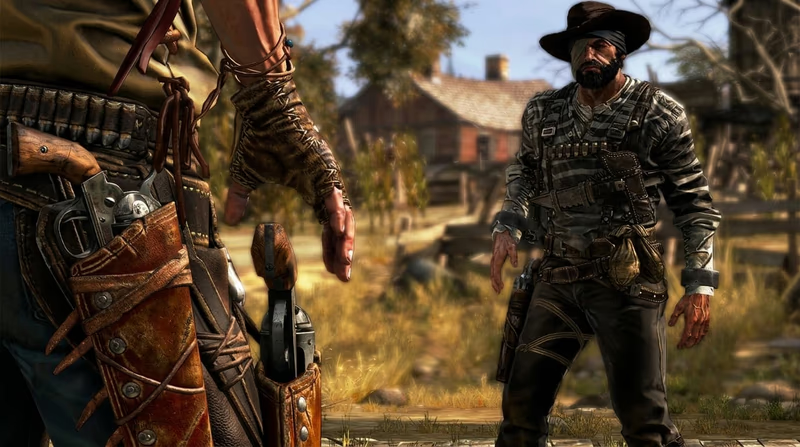
Techland traded gritty realism for painterly legend in this arcade-shooter retelling of the Old West's most famous gunslingers, bounty hunters, and outlaws.