Star Wars: Republic Commando Review: The Tactical Masterpiece of Delta Squad
A retrospective on Star Wars: Republic Commando: LucasArts' gritty military shooter, the brotherhood of Delta Squad, the iconic visor HUD, and the power of "Vode An."

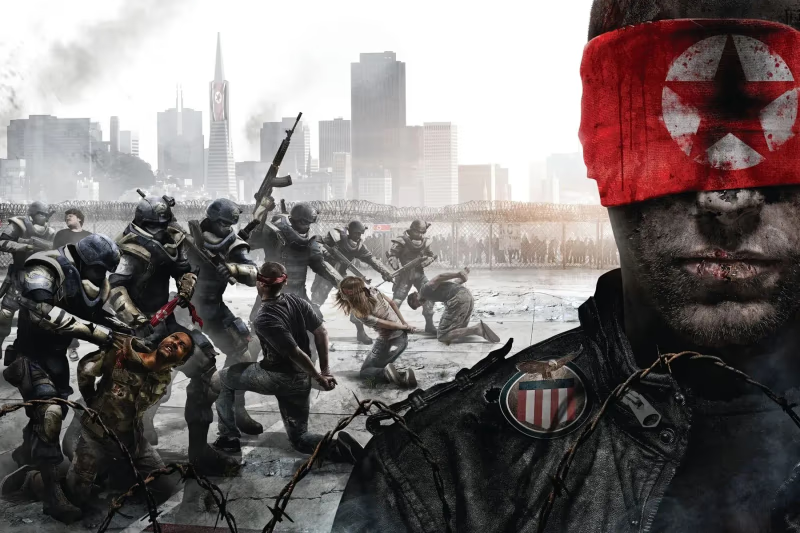
Homefront Video Game Official Cover Art & Key Visual

Back in 2011, during the golden age of modern military shooters where Call of Duty and Battlefield reigned supreme, THQ and Kaos Studios entered the ring with Homefront. Backed by a terrifying narrative premise penned by John Milius (writer of Apocalypse Now and Red Dawn), the game envisioned the economic collapse of the United States and a brutal occupation by a unified Greater Korean Republic.
The game establishes its dark, hopeless tone within the first ten minutes. As protagonist Robert Jacobs—a civilian helicopter pilot forcibly recruited by the occupying army—you are subjected to a harrowing bus ride through occupied Montrose, Colorado. Witnessing summary executions of parents in front of their toddlers and the filling of mass graves creates an emotional impact that was incredibly rare for the genre at the time.
Once rescued by local Resistance leaders Connor and Boone, the narrative thrives on moral dichotomy. The constant debate between Connor’s violent extremism and Boone’s humanity highlights the desperate lengths people will go to reclaim their homeland, successfully turning classic American suburbs, baseball fields, and strip malls into ruined war zones.
Despite its narrative ambition, the single-player campaign copies the Call of Duty formula almost to a fault. The gameplay relies heavily on heavily scripted corridor sequences and standard aim-down-sights shooting.
Where the campaign faltered, the multiplayer truly shined, brilliantly bridging the gap between close-quarters infantry combat and large-scale vehicular warfare.
Pros:
Cons:
Homefront remains an ambitious, misunderstood victim of its own era. While its single-player experience was too brief and linear to topple the genre's titans, its exceptional world-building and genuinely brilliant multiplayer make it a fascinating piece of FPS history.

Affiliate link: Support the blog via Instant Gaming at no extra cost.
Ace Combat 7: Skies Unknown
Others Posts
A retrospective on Star Wars: Republic Commando: LucasArts' gritty military shooter, the brotherhood of Delta Squad, the iconic visor HUD, and the power of "Vode An."
We explore how a modified PC architecture, the inclusion of a standard hard drive, and the pioneering of broadband multiplayer disrupted the sixth generation of consoles, securing Microsoft's place in the living room and altering the industry's trajectory forever.

A cold war setting, sleek gunplay, and stunning tech. Was Killzone Shadow Fall a worthy PS4 launch title or a franchise killer?
Master turn-based combat in Gears Tactics. Learn to chain executions for infinite Action Points, optimize class builds, and crush colossal bosses.

Is Crysis just a hardware-melting benchmark or a genuine FPS masterpiece? We analyze CryEngine 2, Nanosuit mechanics, destructible physics, and the controversial Ceph shift.
Master the skies of Strangereal in Ace Combat 7. Learn expert flight controls, High-G turns, atmospheric survival, and the optimal special weapon loadout for all 20 campaign missions.


Are the Minecraft Dungeons DLCs worth buying? We break down all 6 expansions, their biomes, unique mechanics, boss fights, and rank the absolute must-haves.
Master turn-based combat in Gears Tactics. Learn to chain executions for infinite Action Points, optimize class builds, and crush colossal bosses.

Analysis of the PlayStation 4 and PS4 Pro hardware. We examine the shared CPU bottleneck, the mirrored butterfly GPU design, memory optimizations, and the hardware-level checkerboard rendering that enabled the 4K transition.

PlayStation 5 Pro hardware: PSSR, Advanced Ray Tracing, and the AI Revolution. We analyze Sony's PlayStation Spectral Super Resolution (PSSR), RDNA 4 Ray Tracing advancements, and the engineering behind the end of the Fidelity vs. Performance compromise.
guides
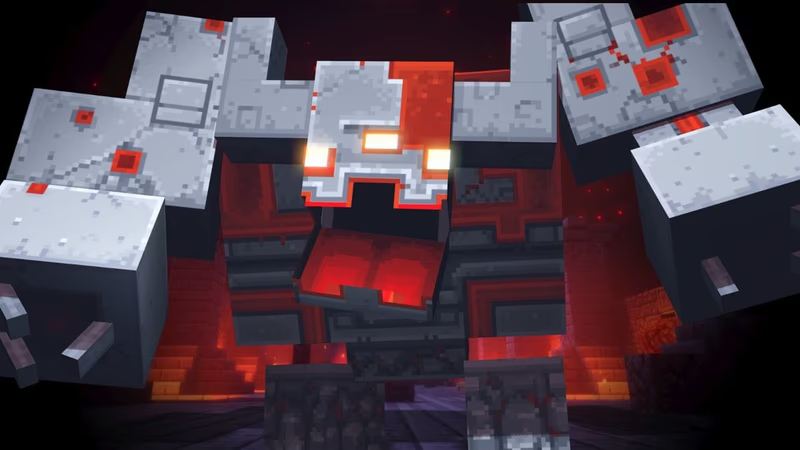
Conquer the toughest bosses in Minecraft Dungeons. Master attack patterns, exploit weak points, and equip the best builds for every major fight.