PlayStation 5 (PS5) Hardware Analysis
The PlayStation 5 hardware architecture. We analyze Mark Cerny's custom I/O complex, the revolutionary 825GB SSD, liquid metal thermal engineering, and how Sony eradicated the traditional storage bottleneck.

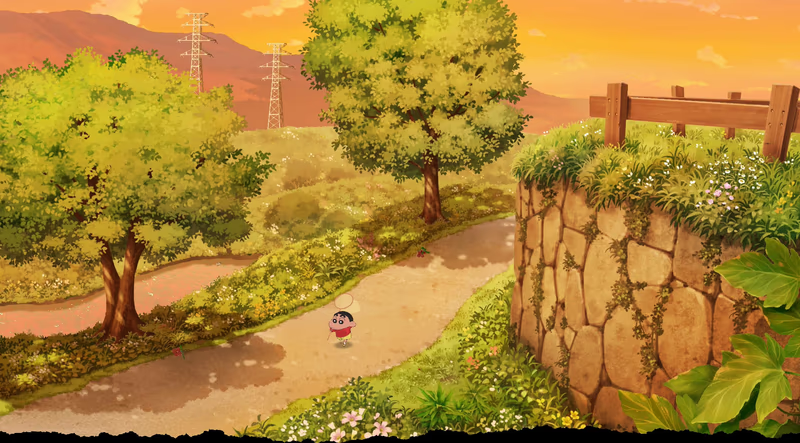
Image captured on Switch 2

Filling up Shin Chan’s Summer Diary is not just about eating snacks and fighting toy dinosaurs; it requires patience, a quick net, and a very keen eye. In Shin Chan: Me and the Professor on Summer Vacation, catching rare bugs goes beyond the personal satisfaction of completing your encyclopedia. Snagging the rarest specimens generates the most sensational headlines for Cap's local newspaper and helps you earn Yen much faster.
Grab your straw hat and your bug net. Here is your ultimate entomology guide to catching the kings of the Japanese summer in Asso.
Catching bugs in this game requires two very different approaches, depending on what you are hunting.
The fauna in Asso changes dramatically depending on the time of day. If you are looking for a specific bug, you need to know when it comes out of hiding.
Do not wander aimlessly. Divide the map into biomes to target exactly what you need:
If you want to be the ultimate bug catcher, these are the prestigious targets you should be looking for to achieve 100% completion:
So, you have a pocket full of legendary beetles. What now?
First, every new catch gets permanently recorded in your Encyclopedia, ticking up your completion percentage. Second, taking these rare bugs to the Newspaper Office guarantees a "star" article. A headline about a Hercules Beetle will skyrocket Cap’s newspaper subscriptions overnight, resulting in massive daily bonuses for Shin Chan. Finally, always check the Kurokami Restaurant Bulletin Board. Yoshiko will frequently post bounties for specific bugs. If you turn in the exact insect she is looking for, she will pay you a small fortune in Yen, keeping you well-supplied with Chocobi for the rest of your vacation.

Affiliate link: Support the blog via Instant Gaming at no extra cost.
Shin chan: Me and the Professor on Summer Vacation
Others Posts
The PlayStation 5 hardware architecture. We analyze Mark Cerny's custom I/O complex, the revolutionary 825GB SSD, liquid metal thermal engineering, and how Sony eradicated the traditional storage bottleneck.
How Capcom's icy masterpiece redefined the third-person shooter and unleashed a perfect storm of mechs, monsters, and ticking-clock survival.

Stepping onto the war-torn surface of Stroggos is a death sentence if you come unprepared. In Quake 4, health and ammunition deplete incredibly fast, and the cybernetic alien forces will overwhelm you if you rely on brute force alone.

Master Lost Odyssey's Skill Link system, Aim Ring timing, Guard Condition, and early difficulty spikes with our ultimate beginner's guide.
The Order: 1886 transports us to a beautifully grim, smog-choked 19th-century London. But this is not the London of Charles Dickens; it's a battleground.

Mutant Year Zero: Road to Eden: XCOM-style tactical combat, real-time stealth infiltration with Dux and Bormin, and the secrets of The Zone.


RoboCop: Rogue City: Teyon's faithful adaptation, Peter Weller's return, the sheer power of the Auto-9, and the gritty streets of Old Detroit.
Mutant Year Zero: Road to Eden: XCOM-style tactical combat, real-time stealth infiltration with Dux and Bormin, and the secrets of The Zone.

Analysis of the PlayStation 4 and PS4 Pro hardware. We examine the shared CPU bottleneck, the mirrored butterfly GPU design, memory optimizations, and the hardware-level checkerboard rendering that enabled the 4K transition.

PlayStation 5 Pro hardware: PSSR, Advanced Ray Tracing, and the AI Revolution. We analyze Sony's PlayStation Spectral Super Resolution (PSSR), RDNA 4 Ray Tracing advancements, and the engineering behind the end of the Fidelity vs. Performance compromise.

games
Halo: Spartan Assault: 343 Industries' jump into the twin-stick shooter genre, the battles of Sarah Palmer, and the heavy baggage of its mobile origins.